


Download E-Book: Understanding Flammable Storage & Associated Regulations

Life Sciences EH&S Community Blog

Current Articles | RSS Feed RSS Feed

Hazards/Symptoms of RCRA 8 Metals: Chromium


Andy Joyby Andy Joy, Life Sciences Account Manager

Almost half-way through our series of RCRA 8 Metals! 

Next on the list is Chromium.  Chromium, Cr, is a stainless-steel gray hard metal that has a high polish and melting point.  It doesn’t have any odor, or taste, and malleable.  Louis Nicolas Vauquelin discovered Chromium in the mineral called crocoite – or most commonly known as lead chromate – in 1797.

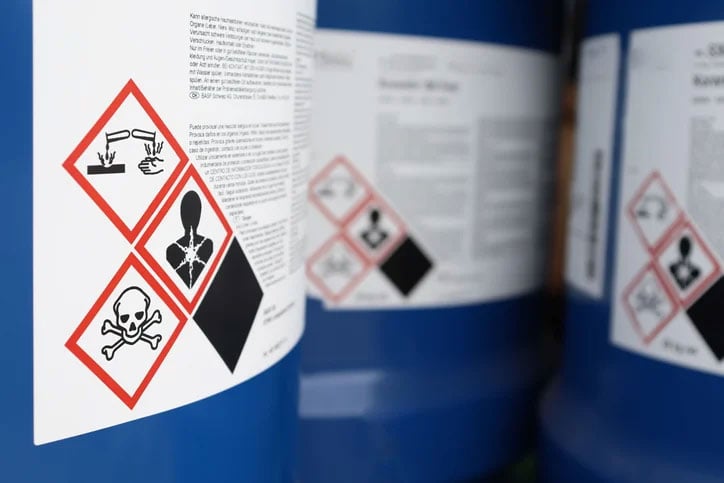
One of the most hazardous forms of chromium is “hexavalent chromium” – (Cr(VI)).  Hexavalent chromium compounds are man-made and widely used in many different industries.  They include, but no limited too: pigments in paints, inks, plastics; anti-corrosive agents to primers and surface coatings; fumes from welding stainless steel; impurities in portland cement. 

Breathing in high levels of Cr(VI) can cause irritation to the cromiumnose and throat.  Symptoms include runny nose, sneezing, coughing, itching, and a burning sensation – almost like a bad cold.  However, prolonged exposure can cause sores to develop in the nose and result in nosebleeds.  If the damage is severe enough, the nasal septum will develop a hole in it.

One can also develop an allergic skin reaction, called allergic contact dermatitis – red, itchy rash that becomes crusty and thickened with prolonged exposure.

Comments

Chromium is just as dangerous as lead, which is something a lot of people may not know. It's really important to check household products that may contain chromium to avoid serious health risks to you and your family. A certified site, LeadCheck sells testing swabs for easily testing for dangerous metals.
Posted @ Saturday, August 20, 2011 1:54 AM by Ron
Post Comment
Name
 *
Email
 *
Website (optional)
Comment
 *

Allowed tags: <a> link, <b> bold, <i> italics