


The Ergonomic Assessment: Identify and Reduce Ergonomic Risk
Ergonomic risk is present across all industries, affecting millions of workers every year. Whether your employees are moving materials, working in a biosafety cabinet (BSC), using power tools, or typing on a laptop, ergonomic hazards can be present. Fortunately, there are a variety of tools and solutions safety professionals can implement to lower the risk to employees—starting with an ergonomic assessment.
Importance of Ergonomics
The musculoskeletal system is what allows employees to move, lift, and perform their jobs—but it’s also the first place strain and injury occur when work conditions aren’t designed well. Poor ergonomic conditions can result in the development of musculoskeletal deterioration and musculoskeletal disorders (MSDs).
Work-related MSDs, also known as workplace musculoskeletal disorders (WMSDs), are a major topic of concern. This broad classification encompasses a variety of conditions, injuries, and disorders that occur due to poor ergonomic conditions in the workplace and impact the function of:
- Joints
- Muscles
- Nerves
- Tendons
- Spinal discs
According to the National Safety Council, between 2023 and 2024, almost a million Days Away from Work, Job Restriction, or Transfer (DART) MSD cases occurred in the private sector.
A WMSD can decrease a worker’s ability to complete their normal job duties, thereby impacting productivity onsite. In addition to worker productivity, WMSDs can also take a toll on employee morale and a site’s safety culture.
Fortunately, WMSDs are preventable with proper consideration for ergonomic risk.
Ergonomics considerations:
- Protect workers from MSDs
- Prove company commitment to employee wellbeing
- Ensure employee longevity and commitment
Ergonomic Risk Factors
There are seven common ergonomic risk factors:
- Duration: How long is a task being performed?
- An example of this risk factor would be standing at a lab bench for an 8-hour workday.
- Compression: Is a part of the body being pushed against equipment or tools?
- An example of the compression risk factor is pressing an elbow into the metal edge of a fume hood or BSC to maintain the proper angle while pipetting.
- Posture: Does the workspace setup promote a neutral posture?
- An example would be a tall person sitting at a non-adjustable workstation that forces them to hunch over.
- Vibration: Is the body being vibrated during normal work?
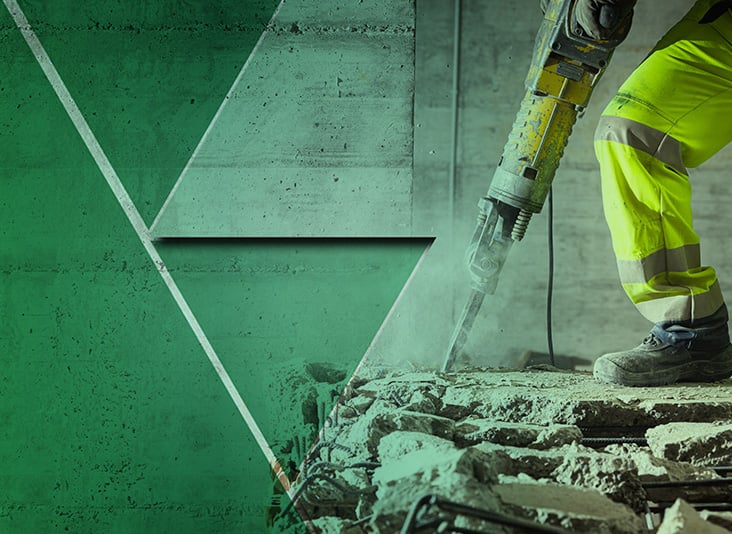
- An example of the vibration risk factor would be using a jackhammer or driving a commercial vehicle.
- Force: Do work tasks require employees to apply excessive force?
- An example would be lifting boxes heavier than what can be lifted comfortably.
- Repetition: How often is a task being completed?
- An example of the repetition risk factor would be pressing the plunger of a pipette again and again.
- Cold Temperature: What is the temperature of the workspace?
- An example would be working in a walk-in cold room or outside in the winter
Utilize ergonomic assessment tools, in addition to conversations with workers, to identify common ergonomic hazards associated with specific job duties.
Ergonomic Programs
Creating a robust ergonomics program includes performing an ergonomic assessment for all tasks of concern, documenting solutions to decrease ergonomic risk, and instituting holistic ergonomics training.
Ergonomic Assessment
An ergonomic assessment will help uncover ergonomic hazards. The following are common ergonomic assessment tools:
- Rapid Upper Limb Assessments (RULA): RULAs evaluate biomechanical and postural loads on the upper extremities, neck, and core. Employees are scored on posture, force, and repetition to determine the appropriate level of intervention necessary to improve ergonomics.
- Rapid Entire Body Assessments (REBA): Like RULAs, REBAs score posture, force, and repetitional loads across the entire body.
- Ovako Worker Posture Analysis System (OWAS): OWAS evaluates and identifies harmful working postures by categorizing posture into codes based on position of body parts and external load weight.
- National Institute for Occupational Safety and Health (NIOSH) Lifting Equation: The NIOSH Lifting Equation is used to calculate the recommended weight limit (RWL) for manual lifting tasks.
Each of the tools listed above have strengths and weaknesses; it is important to understand the task you are looking to evaluate and whether a given tool will take all applicable ergonomic risk factors into account.
Scoring Ergonomic Tests
Each test scores ergonomic risk differently based on how it weighs the values associated with different segments of the body. Scores for RULA range between 1 and 7; scores for REBA range between 1 and 15. Higher scores indicate a greater risk of a worker developing an MSD and thus a more urgent need to introduce ergonomic intervention and controls.
How to Conduct an Ergonomic Assessment
One: Perform tests using ergonomic assessment tools:
Choose the assessment that is best aligned with the work being performed. For example, RULA would be an appropriate assessment tool for tasks like pipetting or typing, due to the emphasis its scoring system places on the upper body. The scoring system for REBA, in contrast, places equal value on the upper and lower body which would make it a more appropriate tool to evaluate tasks involving the entire body such as lifting, pushing, or pulling.
Two: Interpret the scores from the assessment tool:
Ergonomic assessment tools will produce a numerical risk score that can be presented to key stakeholders and decision makers as a way to highlight the need for additional ergonomics controls. However, to fully understand the ergonomic risk associated with a task, ergonomic assessment tool results must be paired with conversations with employees about how they feel before, during, and after performing work. These conversations should help you understand what their concerns are and if they feel any pain or discomfort while performing work duties.
Three: Implement ergonomics controls:
Once ergonomic hazards and gaps are identified, ergonomic controls should be implemented to mitigate the potential risk. Ergonomic controls can include:
- Adjusting the work area
- Redesigning work tasks
- Shortening task duration
- Introducing equipment designed to lower ergonomic risk
Four: Repeat ergonomic tests:
An ergonomic assessment should be conducted again once ergonomic controls have been implemented. The newly calculated ergonomic risk score should be compared to the old score to determine the impact of the implemented controls and assess if further action is needed.
Ergonomic assessments also need to be redone whenever there is a change in work processes, tasks, or operations, or if an employee expresses new or escalating discomfort.
Real-World Ergonomic Assessment Success
During a lab safety walk, I noticed a member of lab staff dragging a 50-liter collection bottle of disinfected biohazardous waste to the nearest floor drain. The employee had a siphon tool to transfer the liquid from the bottle to the drain without lifting the container. However, they still had to drag the waste bottle from the equipment about seven feet. Concerned about ergonomic risk, I performed a REBA assessment on the “dragging” posture. As expected, the test produced a high ergonomic risk score. After researching potential solutions, I found a small, wheeled dolly cart with locking wheels. The lab team was happy with this solution, and the level of ergonomic risk experienced by the employees was reduced.
Procedure Documents
Procedure documents are the written guidelines for managing, assessing, and preventing workplace ergonomic hazards. Organizational ergonomic plans are established from an ergonomic workplace assessment and outline:
- How to identify workplace ergonomic hazards, including formal and self-assessments
- Corrective actions and controls
- Roles and responsibilities
- Ergonomic training plans
- Documentation and record keeping standards
Ergonomics Training
To get the most value, an ergonomics training program must include employee training on topics such as:
- The developed ergonomics program
- Employee rights within the training program
- How to identify and voice ergonomic hazard concerns
- The dangers of improper ergonomics
- How and when to speak up when they have safety concerns, and to whom
- Employee rights as it relates to ergonomic concerns communication
Most ergonomic trainings are more generalized and not specific to the work being performed, which limits effectiveness. When it comes to ergonomics and safety for a specific machine, that would be covered in that machine’s use training rather than a holistic ergonomic training program. Good ergonomic training for employees, on the other hand, cover:
- The dangers of improper ergonomics
- How and when to speak up when they have safety concerns, and to whom
- Employee rights as it relates to ergonomic concerns communication
There are currently no nationally enforced ergonomic training standards—nor are there federal regulations that demand employers provide training. It is, however, mandated by some state and local governments (like in Washington state) and agencies such as the California Division of Occupational Safety and Health (Cal/OSHA).
Despite the lack of regulation, any company that takes the time to implement an ergonomics program is losing value without an accompanying training curriculum. Training maximizes program ROI while simultaneously instructing team members about their general health, safety, and wellbeing in the workplace.
Ergonomic Assessment Services Support
Deciding what tasks to evaluate, the correct ergonomic risk assessment tool to use, and what controls to apply can be overwhelming. That is where Triumvirate Environmental can help! Our EHS consultants are equipped to jumpstart your site’s ergonomic future—conducting an ergonomic evaluation or EHS risk assessment, giving ergonomic and EHS training to employees, and making suggestions for as well as helping implement ergonomics controls through industrial hygiene services. Contact us today to get started with a customized program that supports you.
Ergonomics FAQs
In-house ergonomics trainings strain bandwidth of internal trainers and often do not permit the customization necessary for a quality ergonomics training program. Customization can include specific elements, such as:
- The people responsible for the ergonomics program
- The vendors who support ergonomics safety
- What ergonomically-designed tools are available onsite for staff to use, such as certain types of chairs or keyboards
Because these elements will vary by organization, facility, and even workgroup, an “out-of-the-box” training program cannot sufficiently cover them all. A specialized training partner can help customize all ergonomics trainings in a beneficial, efficient, and streamlined way.
Also, reaching ergonomics training program success is easier said than done—customization is crucial to prevent trainings from becoming so generic and basic that they are ineffective. Facility-, organization-, or site-specific trainings can transform the learning experience from bland and generic to impactful and beneficial.
Hot temperatures are not associated with ergonomic risk; cold temperatures increase risk because of the impact of low temperatures on muscles. For worker heat awareness and support, consider a heat stress toolbox talk.