





Hazardous Waste Manifests: Everything You Need to Know

Updated November 3, 2026

Hazardous waste barrels waiting for transportation.
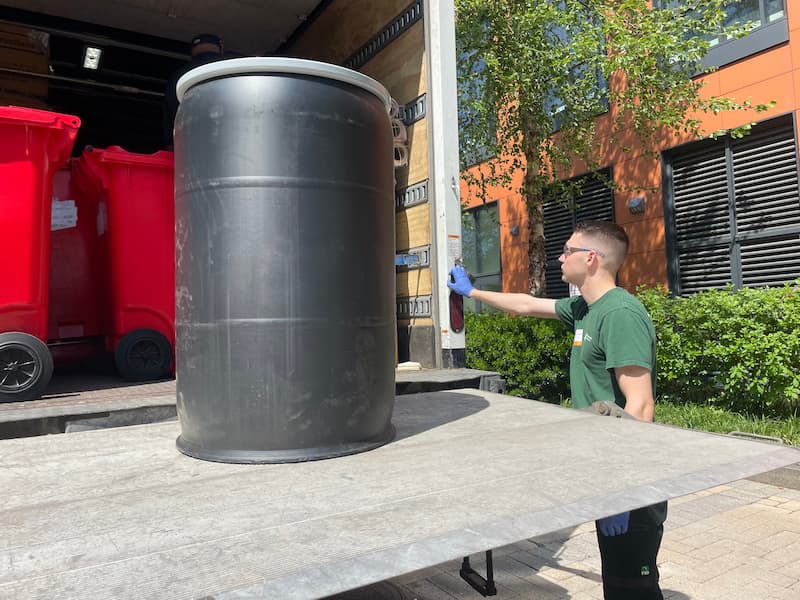
A Triumvirate Environmental technician loads a waste drum onto a truck for transportation and disposal.
Triumvirate employees stand in front of a truck full of manifested hazardous waste.
A Triumvirate ESPEC waits for a hazardous waste manifest near a truck.

What Is a Hazardous Waste Manifest?

A hazardous waste manifest is the tracking document that follows a hazardous waste shipment from the generator, through each transporter, to the receiving facility. In the US, it takes the form of the Uniform Hazardous Waste Manifest (EPA Form 8700-22), which records the waste type, quantity or weight, transportation details, and signatures from every party that handles the waste. Hazardous waste manifests are legally required in the United States.

What Is the EPA e-Manifest System?

Since June 30, 2018, the EPA has transitioned to a fully electronic manifesting system; the term “e-Manifest” describes this digital tracking system for hazardous waste shipments across the US. The EPA's e-Manifest system applies to state-regulated hazardous wastes, Resource Conservation and Recovery Act (RCRA) wastes, and Toxic Substances Control Act (TSCA) wastes, for both imported and exported wastes. This system digitizes the manifest process, helping standardize hazardous waste manifests and centralize hazardous waste tracking information in one easily-accessible database. This program eases safety and compliance for generators and treatment, storage, and disposal facilities (TSDFs) alike.

This required electronic manifest system seamlessly tracks waste from the time it leaves a generator, through each transporter, and up until it reaches the receiving facility.

The EPA’s third “Final Rule” for e-Manifests went into effect starting in January 2025 and includes a number of updates to the regulations. Triumvirate Environmental continues to evaluate EPA e-Manifest program updates and will work to ensure the transition into these new regulations is as seamless as possible for our clients.

A worker reviews a digital hazardous waste manifest.

Who must register for e-Manifest?

Very Small Quantity Generators (VSQGs) and Polychlorinated Biphenyl (PCB) generators are not required to register for e-Manifest—all other generators, transporters, and receiving facilities are. Since January 22, 2025, Large Quantity Generators (LQGs) and Small Quantity Generators (SQGs) are required to register for e-Manifest through RCRAInfo. The receiving facility must submit the electronic manifest to the e-Manifest system and pay any applicable fees.

What is RCRAInfo?

RCRAInfo is a national EPA database that tracks information about all hazardous waste handlers (generators, transporters, and receiving facilities) and their hazardous waste management activities.

How do generator categories (VSQG, SQG, LQG) change manifest requirements?

Generator categories can have a tangible impact on whether or not a facility is required to use a hazardous waste manifest for tracking. Certain exemptions or changes to the federal rules apply depending on an organization's generator status: VSQGs are not required to have an EPA ID, register with RCRAInfo, file Exception Reports, or retain manifests. State or local requirements may change this; view the EPA's state differences page for more information.

Manifest Requirements, Registration, and Fees

What types of waste require a manifest?

State-regulated hazardous wastes, RCRA wastes, and Toxic Substances Control Act (TSCA) wastes must be manifested. Household hazardous wastes (HHWs) are generally exempt from manifests.

What information must be on a manifest?

A properly prepared uniform hazardous waste manifest will include waste details, waste handling instructions, signature lines from all involved parties, and more. For a complete list of necessary hazardous waste manifest information, refer to the EPA's website. 

What is unmanifested waste?

Unmanifested waste is hazardous waste that was generated and received at a treatment, storage, and disposal facility (TSDF) and not reported on the uniform hazardous waste manifest. This may be because of an exemption or an oversight. Unmanifested waste does not always mean noncompliance.

What is a manifest discrepancy report?

A Manifest Discrepancy Report (MDR) outlines any inconsistencies between details on a shipping manifest. An MDR can be triggered when a TSDF receives waste that significantly differs from the manifest. This could be a mismatch between contents, weight, count, or type and the declared shipment. A significant difference is:

  • 10% or more difference in bulk waste
  • Any piece count variation
  • Obvious type differences

What happens if a manifest is missing, incorrect, or never returned?

If a manifest is incorrect, the TSDF must attempt to reconcile the changes with the generator or transporter within 15-20 days of receipt. If the discrepancy is not resolved, an MDR and a letter describing the reconciliation effort must be sent to the EPA e-Manifest system or administrator.

The generator maintains legal cradle-to-grave responsibility for the waste. If a manifest is missing or never returned, especially after a follow-up period, the generator must file an Exception Report with the state or regional EPA. Exception Reports must be retained for at least 3 years.

How long must manifests be retained?

Generators and transporters must retain electronic hazardous waste manifests for at least three years. Receiving facilities must retain hazardous waste manifests for longer, depending on their specific situation.

How do I register for e-Manifest?

Register for e-Manifest by first creating an account with RCRAInfo, using your facility’s EPA ID number. To get an EPA identification number, submit EPA Form 8700-12 (Site Identification Form) online or by paper. An EPA ID number should be approved and assigned within 2-4 weeks of submission.

Who submits e-Manifests?

Receiving facilities are the only entities that must upload manifests to the e-Manifest system; generators do not upload any manifests.

When must receiving facilities submit manifests?

Hazardous waste manifests are sent to the EPA instantaneously when waste is received by the receiving facility. The e-Manifest system submits manifests as soon as they are signed. Submission should be within 30 days for paper portions of hybrid manifests.

What are e-Manifest submission types?

There are two e-Manifest submission types accepted by the EPA: fully electronic and hybrid. Fully electronic submissions are created directly in the EPA e-Manifest system and signed electronically by all handlers. Hybrid submissions are mixed electronic and paper submissions, created electronically in the system, printed, and signed on paper. Typically, the generator and initial transporter sign on paper and subsequent handlers sign electronically.

How much does it cost to file?

The EPA recently confirmed the final user fees for FY 2026/FY 2027, which will apply for any manifests submitted for shipments initiated on or before October 1, 2027. These reduced prices were enacted in a continued approach to phase out paper manifest submissions. 

Manifest Submission Type Fee per Manifest
Scanned Image Upload $25
Data + Image Upload $7
Electronic Manifest (Fully Electronic and Hybrid) $5


Manifest Roles, State Rules, and Recent Changes

Can a transporter, broker, or receiving facility sign for the generator?

The transporter, broker, and receiving facility can prepare and sign manifests on behalf of generators as long as they have been properly certified as either a preparer or a certifier on those manifests by the site manager for the generator's site for fully electronic manifests. They need to have the appropriate permissions in place and the correct EPA ID number in RCRAInfo.

Does e-Manifest apply to waste manifested in only one state?

Waste required to be manifested by federal or state law falls under the e-Manifest regulation. The regulation includes waste that is required to be manifested in the generator state only or the receiving state only. It is important to know the state regulations in both the state where you are generating the waste and the state where your facility is receiving that waste at the end of your shipment. Both of those fall under the scope of e-Manifest.

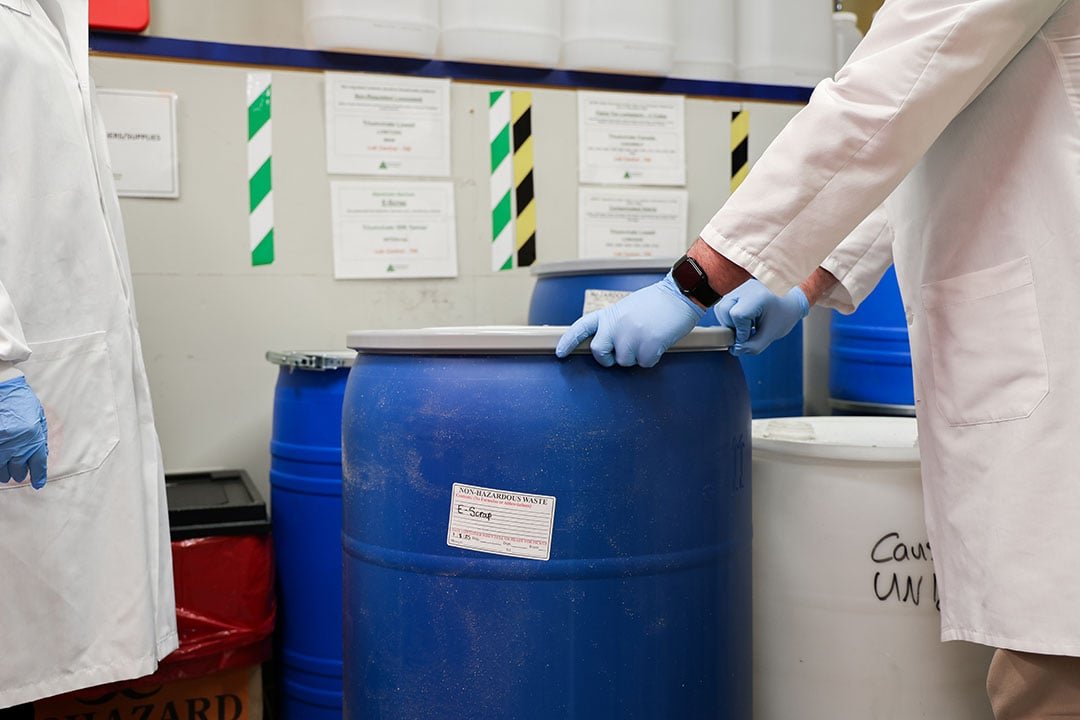
A Triumvirate Environmental technician preps a waste barrel for transportation and manifesting.

What are the e-Manifest deadlines?

A number of final third rule updates took effect starting January 22, 2025. December 1, 2025 marked the second and final regulatory deadline for the final third rule updates. There aren't any e-manifest deadlines per se—manifesting is constant whenever waste is shipped for end disposal.

Is the EPA retiring the H141 management code?

Yes. The EPA is officially retiring the H141 management code as of January 1, 2027. This code will be replaced with more specific S-codes within RCRAInfo at that time, after which H141 will no longer be available to use.

Replacing the H141 management code with S-codes will improve tracking and waste visibility. Generators and TSDFs may need to update software or manifesting processes accordingly. S-codes are already available in RCRAInfo, and an early transition can help ease friction once the H141 management code is no longer available.

Frequently Asked Questions

Can Triumvirate Environmental handle manifesting for generators with multiple sites or states?

Yes, we can handle manifesting for generators with multiple sites and states. Our expert teams are trained to support manifesting no matter the generator status, state, or site map.

Can Triumvirate prepare and sign manifests on my behalf?

How does ADVISE™ software support manifest tracking?

A Triumvirate technician prepares to ship waste; they will need a hazardous waste manifest.

How Can Triumvirate Support Hazardous Waste Manifesting?

Triumvirate experts, from our onsite environmental services teams to our drivers and receiving facilities, are trained to help ensure full compliance with hazardous waste manifests. This is all a part of our holistic approach to waste management and disposal.

From source reduction techniques to hazardous waste transportation and handling, our teams know how to support compliant, safe, and efficient waste disposal. We're ready to help you streamline your waste program with onsite environmental services and ADVISE™ hazardous waste management software.

Featured Resources

A truck carrying hazardous waste needs e-manifesting.
Blog

What Is the Final Third Rule of e-Manifest?

On July 26, 2024, the EPA published updated hazardous waste manifest regulations. Learn more about the Final Third Rule of e-Manifest including updated guidance and relevant deadlines.
Cover slide for Hazardous Waste e-Manifest Top Priorities webinar.
Webinar

Hazardous Waste e-Manifest: Top Priorities

Our experts discuss top priorities when it comes to hazardous waste e-Manifests; general information and what you need to do now for compliance with the Final Third Rule of e-Manifest.
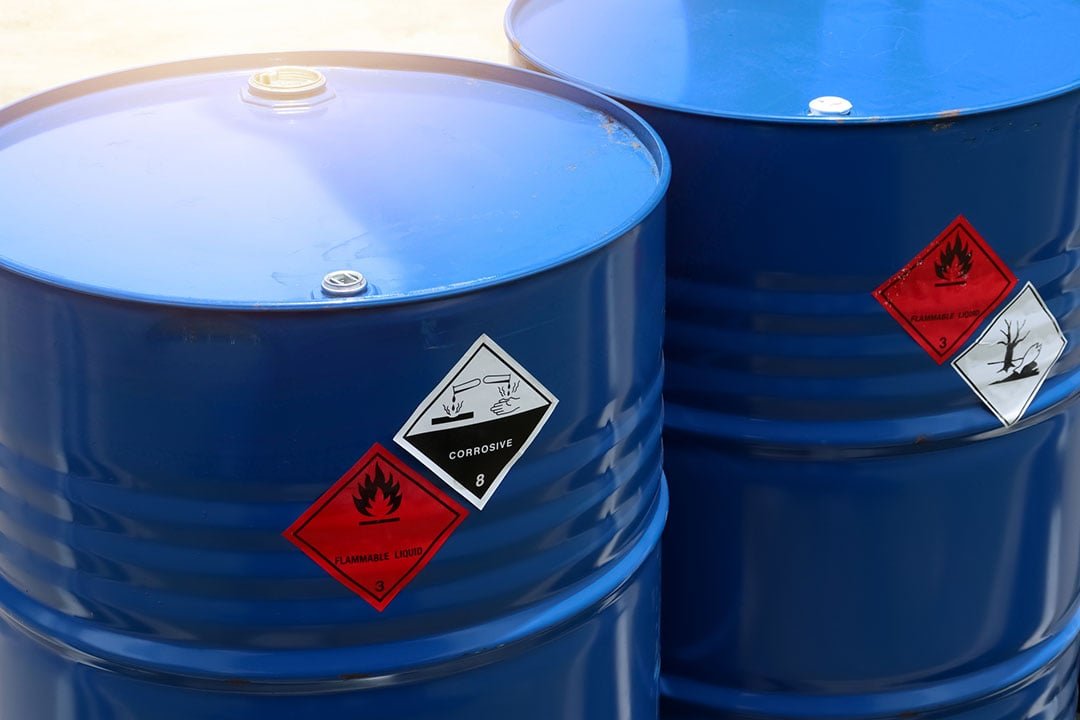
Chemical hazardous waste drums with hazard communication labels
External FAQ

EPA Hazardous Waste Manifest FAQs

Review a list of the EPA's Frequently Asked Questions about e-Manifest for guidance from the source.
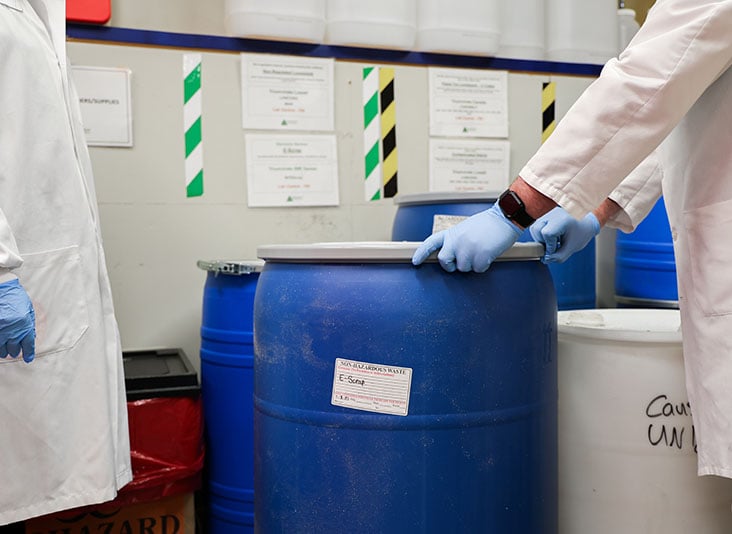
A Triumvirate technician successfully disposes of a waste barrel with waste management strategy for scale.
Blog

Multi-Site Waste Management Strategies for Scalable Operations

As sites scale, fragmented waste management creates risk that organizations just can't accommodate. A strategy-first waste management model, supported by the right waste management infrastructure, can mean the difference between success and failure.
A checklist graphic to use for EPA inspections.
Blog

11 Steps for EPA Inspection Success

EPA inspections often come without warning. Stay prepared for any audit with our top tips for EPA inspection success.

A 3PL worker is on his laptop managing compliance-related tasks.
Blog

3PL Compliance Gap Analysis for Supply Chain Organizations

A 3PL compliance gap analysis, including of hazardous waste manifests, can reveal the hidden places where responsibility falls between operations, safety, transportation, and waste management.
Featured image 573 x 300-2
Blog

Biennial Hazardous Waste Report: Full Compliance Guide

EPA RCRA Hazardous Waste Reports require manifest data for compliant submission. Learn more about the requirements.