

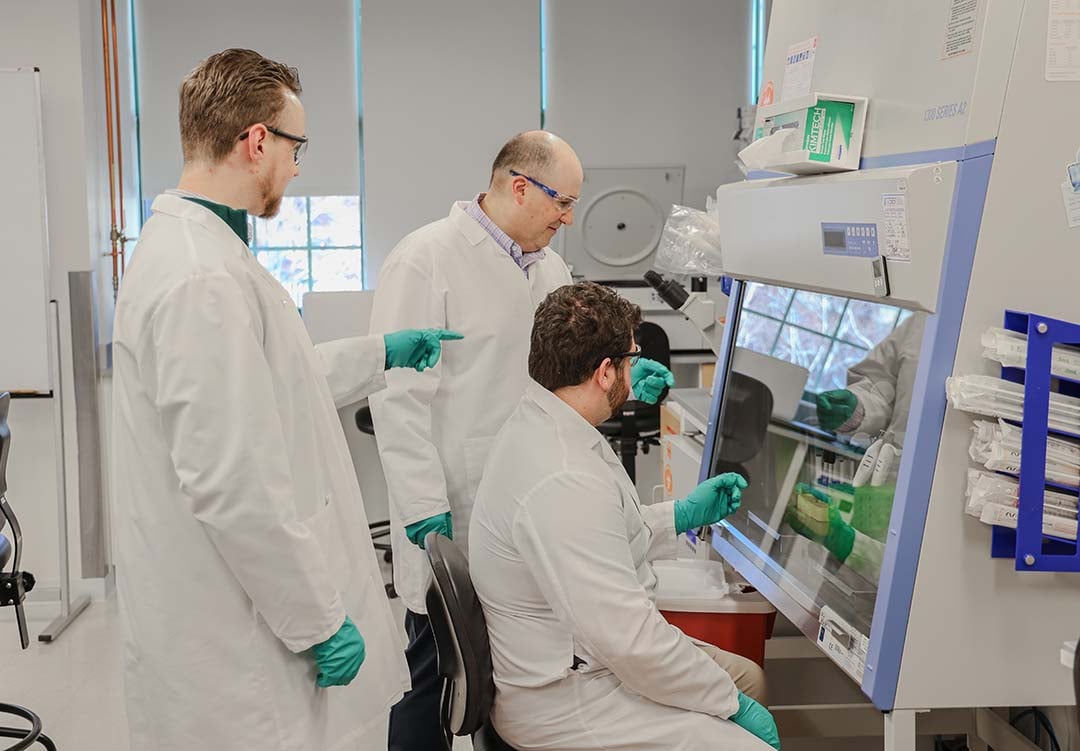
A lab team works at a fully certified biological safety cabinet.
Home > Laboratory and Field Services > Biological Safety Cabinet Certification

Biological Safety Cabinet Certification

BSC maintenance, decontamination, and certification through BSCTest+ to keep your operations running smoothly—so your team can stay focused on the science.

Ensure your biosafety cabinets are working for you with BSC maintenance, decontamination, and certification services designed with operational integrity in mind—freeing your team to focus on core research and mission-critical work.


Exceeding Customers’ Expectations

Our Triumvirate EHS consultant, Olivia, has been extremely helpful in helping us make sure our lab is operating within proper EHS guidelines. She's very knowledgeable and is proactive in setting up tasks for herself. She's great at managing EHS training and making sure that none of our certificates and permits are expired. She's a great asset to our team here, and we look forward to continuing to work with her.

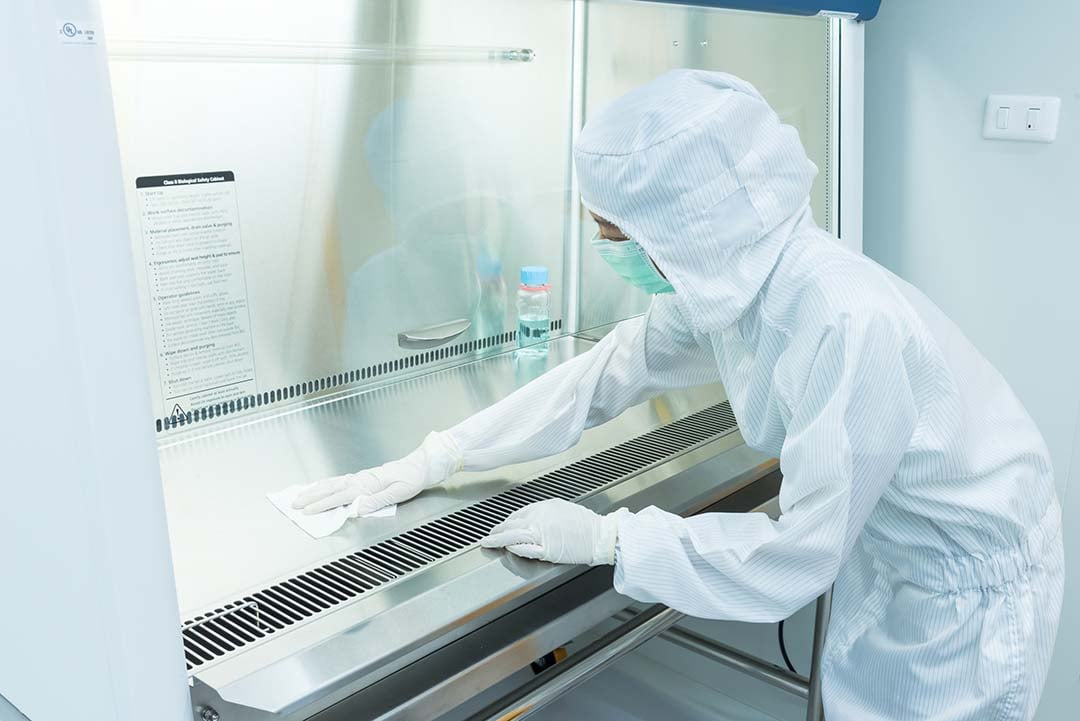
A lab technician disinfects and decontaminates a biological safety cabinet in a lab.

BSC Maintenance: The Core of Operations

Biosafety cabinets are often the most finnicky of team members—they require regular maintenance and decontamination to keep working properly and stay certified. This is no small task, however; we often see organizations struggle to:

  • Maintain compliance with NSF/ANSI Standard 49 guidelines
  • Perform fast but effective BSC maintenance and decontamination to limit operational downtime
  • Maintain BSC certification and documentation at scale
  • Keep up with biosafety cabinet maintenance and decontamination needs on a regular and emergency basis
  • Keep biological safety cabinets functional in the long term

Your Partner in BSC Certification

What makes Triumvirate Environmental’s biological safety cabinet certification different from other providers? We work with you for maintenance, testing, and decontamination with an end-to-end approach through BSCTest+:

  • Access to the best technology for maintenance, testing, and decontamination
  • Fast but effective service
  • National footprint so we can respond quickly with highly trained BSC technicians
  • Proven track record of extending service life of biological safety cabinets
  • Enables lab teams to reduce operational burden and redirect resources toward research and innovation
A team of Triumvirate Environmental onsite support specialists work at a biological safety cabinet in a lab.

What to Expect for Biological Safety Cabinet Certification

With BSCTest+, we provide regular and as-needed BSC maintenance, testing, and decontamination so your biological safety cabinet stays certified year-round.

Biosafety cabinets require near constant upkeep to remain working properly. This includes troubleshooting to get to the root of BSC operational issues, and may involve onsite repairs and parts replacements (such as for filters).

Biological safety cabinet certification includes testing to determine when maintenance and decontamination are needed. Relevant tests that we run include:

  • Air velocity testing for acceptable airflow
  • HEPA filter integrity testing to ensure no upstream leakage
  • Visualization of airflow testing to visually identify “dead spots” and unusual airflow areas
  • As needed additional testing:
    • Particle count classification
    • Viable environmental sampling
    • Sound level testing
    • Fluorescent light testing
    • UV light testing
    • Electrical testing
    • Vibration testing
    • Temperature/humidity testing

Routine and as-need biological safety cabinet decontamination:

  • Surface decontamination on a regular basis
  • Bi-annual full decontamination
  • Decontamination between operational changes and before relocation
  • Contaminant identification and subsequent disinfection

Biological safety cabinet certification ensures your appliance meets NSF/ANSI Standard 49, providing proper environmental, personnel, and product protection. We provide all relevant documentation to prove compliance and certification.

Why Biological Safety Cabinet Certification Matters

Checklist icon

Maintain Integrity

Sample and product integrity starts with BSC integrity—which is only possible through BSC testing, maintenance, and decontamination as needed.

Shield checkmark icon

Improved Safety

Keep teams safe from contaminants that would otherwise pose risk.

Growth chart icon

Avoid Operational Disruption

Broken equipment significantly slows operations—BSC maintenance and certification keeps things running smoothly.

Online checklist icon

Full Compliance

Meet NSF/ANSI and other standards for biosafety cabinet compliance.

Money increasing graph icon

Cost Savings

Regular BSC maintenance helps extend the life of the equipment and prevents costly repairs down the line, allowing organizations to reinvest those resources into research, innovation, and core mission priorities.

Who We Work With

Beaker checkmark icon

Life Sciences

Pharmaceutical manufacturers and research labs.
Graduation cap icon

Higher Education

Universities and academic research facilities.
Microscope icon

Start-up Labs and Incubators

Early-stage labs, shared research space, and maturing organizations.
Healthcare icon

Healthcare

Hospitals, clinics, and laboratories.
Avoid BSC operational issues, protect equipment integrity, and keep your team focused on what matters most. Reach out to our experts today.


Frequently Asked Questions

Can I continue to work on a BSC that is not certified?

A BSC certificate indicates that the machine is safe to use and will maintain research integrity. This is a crucial part of any laboratory operation—without safe, reliable data and samples, trust, safety, and innovation are at risk. While you can technically use an uncertified BSC, it is not safe, compliant, or smart.

Does Triumvirate Environmental support all types of BSCs?

What other types of decontamination does Triumvirate Environmental support?

Featured Resources

Top 10 OSHA violations usual suspects in a line up.
Regulatory Compliance

Top 10 OSHA Violations: The Usual Suspects

Year after year, organizations across industries and throughout the nation fail to meet federal worker safety guidelines. And year after year, this ...
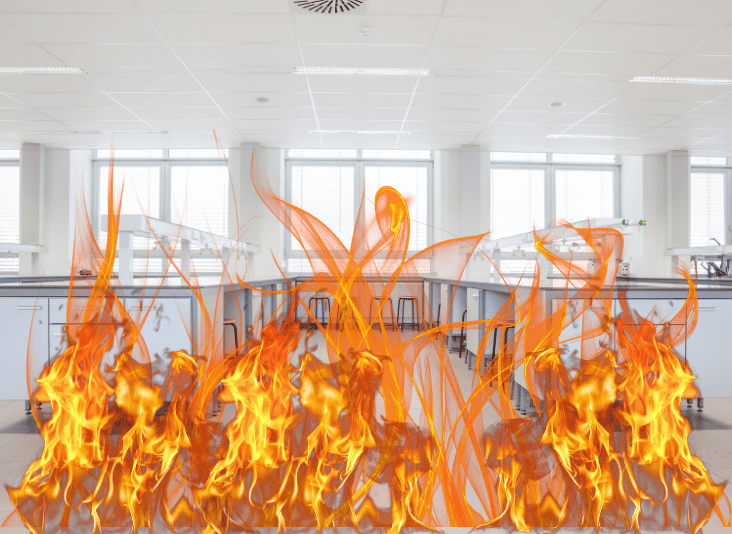
A fire burns uncontrolled in a laboratory environment. Fire prevention and suppression techniques are needed.
Safety

Lab Fire Safety: Connecting Fire Prevention and Suppression

The United States, on average, experiences about 5 chemical incidents per week. These incidents can lead to widespread fires, including a recent ...

Laboratory professional examines a biological sample while following biosafety procedures in a research laboratory.
Regulatory Compliance

Draft NIH Biosafety Policy for Research Involving Biohazards

The National Institutes of Health (NIH) is moving toward a broader, risk-based biosafety framework that could affect research governance, ...

EHS employee documenting hazardous waste drums during facility inspection.
Hazardous Materials

Reduce Hazardous Waste Disposal Costs with TSDFs

Every year, organizations spend millions managing hazardous waste—but many are trying to optimize the wrong cost centers. While disposal fees receive ...
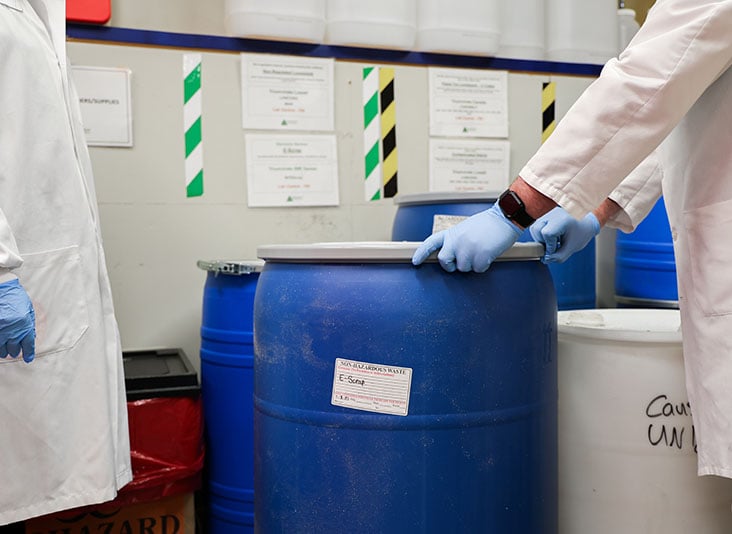
Labeling and classifying waste containers in a multi-site waste management program.
Hazardous Materials

Multi-Site Waste Management Strategies for Scalable Operations

Multi-site companies rarely design their waste programs from a blank page. More often, they inherit them through growth: A new facility opens. A lab ...

Industrial worker in a hard hat reviewing data on a laptop in a warehouse or manufacturing facility.
Waste Management

3PL Compliance Gap Analysis for Supply Chain Organizations

Warehouses and distribution centers today handle an ever-growing mix of products: regulated goods, defective goods, damaged materials, a nd more. A ...