
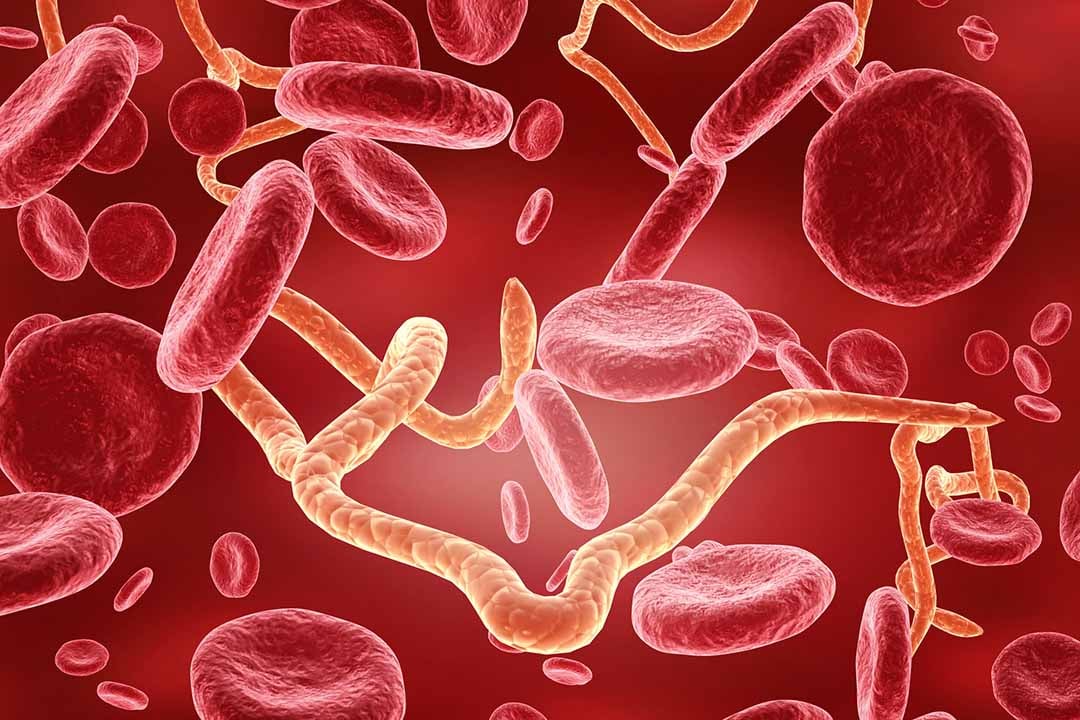



Bloodborne pathogens training prevents workers from contracting bloodborne diseases.
Home > EHS Consulting > Bloodborne Pathogens Training

Bloodborne Pathogens Training

Bloodborne pathogens training that meets OSHA’s standards for employees who may encounter human blood at work.

Meet OSHA bloodborne pathogens training requirements with flexible, expert-led learning built for real workplace risks.


Exceeding Customers’ Expectations

The presenter's deep experiences in a wide variety of industries helped keep the large and varied audience engaged.
A trainee takes notes during bloodborne pathogens training.

Exposure Risks Solved with Bloodborne Pathogens Training

When employees may come into contact with blood or other potentially infectious materials (OPIM), training is not optional. Employers must educate workers on hazards, prevention methods, and response procedures. Not only that, but training has to be effective—retained to the extent that teams will know what to do at the appropriate time.

Without effective training, organizations face:

  • Increased exposure incidents
  • Confusion during spills or emergencies
  • Improper use and disposal of PPE, or using incorrect levels of PPE
  • Gaps in annual compliance
  • Higher operational and liability risk
  • Lowered employee learning retention

Triumvirate Environmental helps organizations close those gaps with accessible, engaging training built for retention and real-world application.

Your Partner in Bloodborne Pathogens Training Service

What makes Triumvirate Environmental’s bloodborne pathogens training different?

  • Aligned to Occupational Safety and Health Administration (OSHA) requirements
  • Flexible formatting designed for different learning needs
  • Engaging content designed to improve retention
  • Instructors who handle biological materials and waste in labs and hospitals
  • Practical guidance employees can apply immediately
  • Support from a team focused on workplace compliance and safety
A trainer teaches a class on bloodborne pathogens training for safety and compliance.

What to Expect

Complete annual bloodborne pathogens training designed with retention in mind. Our courses use real-world examples and site-specific information to help employees understand hazards, prevention methods, and required procedures when dealing with human blood or OPIMs.

This training is designed for those employees who have an occupational exposure – that is, those who work with blood, body fluids, and other materials that potentially contain bloodborne pathogens, both in laboratory work and when handling biological wastes.

  • Supports OSHA 29 CFR 1910.1030 requirements
  • Appropriate for labs, healthcare, waste handling, and related roles
  • Annual EHS training for covered employees
  • Reinforces employer exposure control programs

This course helps attendees build foundational knowledge that they can apply immediately:

  • Bloodborne pathogens history and basics
  • Epidemiology and symptoms of bloodborne diseases
  • Modes of transmission
  • Universal precautions and exposure control
  • PPE use, limitations, removal, and disposal

Our bloodborne pathogens training can be presented online as a self-paced course or in person, customized for your team or site. Online courses include access to a qualified trainer for questions, as the OSHA standard requires.

  • Online, on-demand; or personalized, on-site
  • Self-paced learning options
  • Scalable for single sites or distributed teams
  • Designed for convenient annual retraining

We simplify training management and completion tracking.

  • Streamlined employee enrollment
  • Consistent training delivery
  • Included assessment
  • Completion records and certificate documentation

Why Bloodborne Pathogens Training Matters

Shield icon

Safer Teams

Reduce exposure risk through better day-to-day awareness and safer work practices.

Human checklist icon

Stronger Compliance

Support annual OSHA training requirements with documented completion records.

Electricity hero icon

Better Response

Prepare employees to act quickly during spills, incidents, or exposures.

Hands together icon

Stronger Team Culture

Reinforce accountability and confidence across teams handling biological materials.

Speech bubble person icon

Expert Support

Leverage guidance from an experienced, trusted environmental health and safety partner.

Who We Work With

Beaker checkmark icon

Life Sciences

Pharmaceutical manufacturers and research labs.
Healthcare icon

Healthcare

Hospitals, clinics, and laboratories.
Graduation cap icon

Higher Education

Universities and academic research facilities.
Electric atom icon

Advanced Manufacturing

Chemical plants, semiconductors, automotive, aerospace, and electronics.
Protect your people and meet training requirements.


Frequently Asked Questions

What is bloodborne pathogens training?

Bloodborne pathogens training teaches employees how to recognize exposure risks, prevent contact with infectious materials, use protective measures, and respond properly if an incident occurs. It is required for covered employees under OSHA’s Bloodborne Pathogens Standard.

How often is bloodborne pathogens training required?

Does Triumvirate Environmental’s bloodborne pathogens course include a certificate?

Featured Resources

Top 10 OSHA violations usual suspects in a line up.
Regulatory Compliance

Top 10 OSHA Violations: The Usual Suspects

Year after year, organizations across industries and throughout the nation fail to meet federal worker safety guidelines. And year after year, this ...

A fire burns uncontrolled in a laboratory environment. Fire prevention and suppression techniques are needed.
Safety

Lab Fire Safety: Connecting Fire Prevention and Suppression

The United States, on average, experiences about 5 chemical incidents per week. These incidents can lead to widespread fires, including a recent ...

Laboratory professional examines a biological sample while following biosafety procedures in a research laboratory.
Regulatory Compliance

Draft NIH Biosafety Policy for Research Involving Biohazards

The National Institutes of Health (NIH) is moving toward a broader, risk-based biosafety framework that could affect research governance, ...

EHS employee documenting hazardous waste drums during facility inspection.
Hazardous Materials

Reduce Hazardous Waste Disposal Costs with TSDFs

Every year, organizations spend millions managing hazardous waste—but many are trying to optimize the wrong cost centers. While disposal fees receive ...
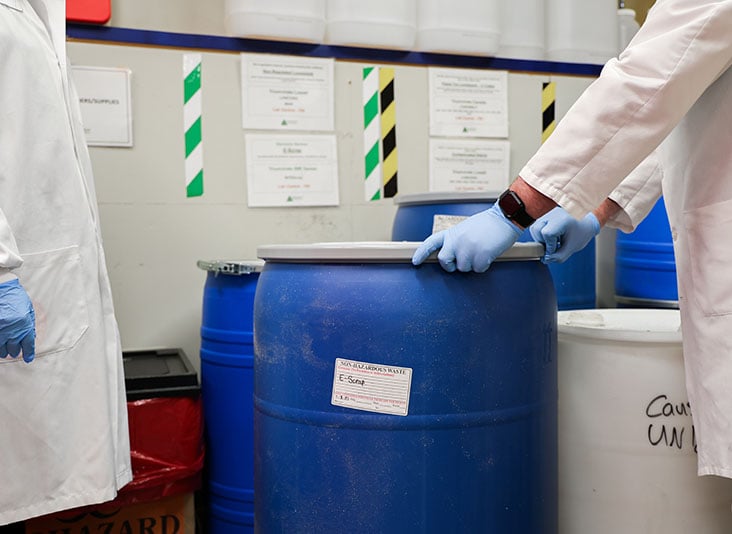
Labeling and classifying waste containers in a multi-site waste management program.
Hazardous Materials

Multi-Site Waste Management Strategies for Scalable Operations

Multi-site companies rarely design their waste programs from a blank page. More often, they inherit them through growth: A new facility opens. A lab ...

Industrial worker in a hard hat reviewing data on a laptop in a warehouse or manufacturing facility.
Waste Management

3PL Compliance Gap Analysis for Supply Chain Organizations

Warehouses and distribution centers today handle an ever-growing mix of products: regulated goods, defective goods, damaged materials, a nd more. A ...