




A pharmacist provides a prescription to a patient.
Home > Commercial and Hazardous Waste Disposal > Pharmaceutical Waste Disposal

Pharmaceutical Waste Disposal Services

Expert handling of expired, unused, or surplus pharmaceutical waste including meds and equipment.

Nationwide DEA-approved facilities and decades of expertise for all pharmaceutical waste disposal challenges.


Only Excellence for Our Customers

I wanted to take a moment to acknowledge and appreciate the exceptional efforts of Marlo. Her dedication and contributions have been invaluable to our team and our projects.

Here are a few reasons why Marlo truly stands out:

  • Consistent Excellence: Marlo consistently delivers top-notch work. Her attention to detail and commitment to quality never fail to impress.

  • Quick and Reliable Responses: Marlo is always prompt in her communications, ensuring that tasks move forward smoothly and efficiently. Her quick responses are a testament to her reliability and professionalism.

  • Initiative and Adaptability: She takes on challenges with enthusiasm and adapts effortlessly to new situations, making her an indispensable member of our team.

  • Positive Attitude: Marlo's positivity is truly inspiring. Even in high-pressure situations, her upbeat demeanor uplifts those around her and fosters a collaborative atmosphere.

Marlo embodies the values of your organization and is a vital contributor to our collective success. Please join me in commending her for her outstanding performance and unwavering dedication.

Thank you for creating an environment that allows employees like Marlo to shine and make a difference.

Pharmaceutical pills move through the manufacturing process.

Reliable, Compliant Pharmaceutical Waste Disposal Services

Pharmaceutical waste can be mismanaged in a variety of ways, increasing the challenges and risks associated with disposal. Reductions to compliance and efficiency occur with improper:

  • Storage/segregation
  • Labeling
  • Recordkeeping
  • Transportation
  • End disposal/destruction

Depending on the type of pharmaceutical waste disposal, there can be a number of federal, state, or local agencies overseeing the process. Pharmaceutical waste companies that violate any rules or guidelines for proper waste disposal face serious consequences. Inspectors and regulators issue citations which can in turn lead to significant fines. This in turn can result in facility shutdowns and a damaged reputation. This isn’t even to mention the people aspect: improper handling and disposal endangers employees, the community, and the environment. That’s why it’s important to look beyond the typical pharmaceutical destruction companies and find a true partner.

Your Dedicated Pharmaceutical Waste Disposal Partner

As one of the nation’s leading pharmaceutical waste disposal companies, we are so much more than a pharmaceutical waste disposal vendor—we're a true partner. For us, it’s about protecting your people, your reputation, and the environment. At Triumvirate, we go beyond compliance to deliver a smarter, safer, and more efficient approach.

  • Comprehensive, end-to-end pharmaceutical waste management
  • Proven expertise in DEA, RCRA, EPA, and DOT compliance
  • Real-time tracking and reporting for full visibility
  • Nationwide coverage backed by decades of experience
A hand holds pill packages ahead of pharmaceutical waste disposal.A hand holds pill packages ahead of pharmaceutical waste disposal.

How We Manage Pharmaceutical Waste Disposal

Every facility has unique challenges when managing pharmaceutical waste. That’s why Triumvirate Environmental offers customized programs designed to meet specific compliance requirements, optimize operational workflows, and reach sustainability goals. We partner with you to deliver solutions that go above and beyond the typical pharmaceutical disposal companies to help you reduce risk, improve efficiency, and maintain full regulatory compliance. Our approach to pharmaceutical waste management and disposal falls into three main steps.

We identify and classify waste based on your pharmacy formulary and then create signage, labels, and waste profiles to segregate each waste stream as efficiently as possible. Some of the waste we handle includes:

  • Hazardous Waste (RCRA-Regulated): Includes characteristic wastes (D-List), F-List, K-List, P-List, and U-List substances that may require specialized hazardous waste disposal protocols.
  • Non-Hazardous Waste: Common pharmaceuticals that pose minimal environmental risk but still require proper handling.
  • DEA-Controlled Substances: Regulated drugs requiring secure, compliant controlled substance disposal or reverse distribution.
  • Chemotherapy Waste: Highly toxic subset of pharmaceutical waste with specialized handling requirements and strict chemotherapy waste disposal standards.
  • Universal Pharmaceutical Waste (UPW): Non-hazardous pharmaceuticals managed under streamlined Subpart P rules established by the EPA.
  • Contaminated Plastics: Plastic materials that may be exposed to chemicals, pharmaceuticals, or biological materials.

There are two types of waste containers for pharmaceutical waste for which we set up unique streams: Non-hazardous pharmaceutical waste utilizes a blue or white container, while hazardous pharmaceutical waste utilizes a black container. The exact bin may differ due to a variety of factors unique to your site, but our experts can help determine which is best for your needs, train your staff, and even support onsite to help with container labeling.

Triumvirate Environmental helps support end-to-end waste disposal. This includes licensed professionals who will pick up the materials and prepare them for safe transport and witnessed destruction, and compliant reverse distribution for eligible pharmaceuticals. The team will use sustainable disposal options wherever possible. We will:

  • Sort, label, package, transport, and dispose of or reverse distribute all pharmaceutical waste products
  • Consolidate the pharmaceutical waste as efficiently as possible
  • Adjust as necessary based on client needs, central accumulation area (CAA) spatial constraints, budgets, and safety/compliance parameters

Pharmaceutical Waste Disposal Matters to Your Business

We partner with healthcare and life sciences organizations to simplify compliance, reduce risk, and streamline operations through end-to-end, DEA-approved pharmaceutical waste solutions. It’s our goal to help protect your reputation, avoid costly fines, and stay focused on patient care.

Check list icon

Stay Audit-Ready

Full compliance with DEA, RCRA, EPA, and DOT regulations—avoid costly fines and protect your reputation. 

Growth chart icon

Boost Efficiency

End-to-end service from collection to destruction, plus formulary support and waste stream optimization. 

Money increasing graph icon

Reduce Costs

Waste minimization audits and reverse distribution help cut unnecessary expenses and recover value. 

Shield checkmark icon

Ensure Safety & Sustainability

Protect staff, patients, and the environment while meeting corporate responsibility goals.

Online person idea icon

Gain Real-Time Visibility

Cloud-based tracking and reporting for complete transparency and simplified DEA audits. 

Speech bubble person icon

Nationwide Expertise

Federally approved facilities and decades of experience managing complex pharmaceutical waste programs. 

Who We Work With

Healthcare icon

Healthcare

Hospitals, clinics, and laboratories.
Beaker checkmark icon

Life Sciences

Pharmaceutical manufacturers and research labs.
Graduation cap icon

Higher Education

Universities and academic research facilities.
Electric atom icon

Advanced Manufacturing

Chemical plants, semiconductors, automotive, aerospace, and electronics.
Need specialized service? Chances are we've done it. Reach out to our experts today.


Frequently Asked Questions

What are some hazards of pharmaceutical waste?

Safety in the pharmaceutical industry is tied strongly to how pharmaceutical waste is handled. Humans or animals that consume or are exposed to expired or contaminated drugs and poisons are at risk. DEA-controlled substances pose additional risk as they are innately dangerous and susceptible to illegal misuse.

What are the risks of exposure to pharmaceutical waste?

What kind of pharmaceutical waste does Triumvirate handle?

How is pharmaceutical waste destroyed?

Featured Resources

Top 10 OSHA violations usual suspects in a line up.
Regulatory Compliance

Top 10 OSHA Violations: The Usual Suspects

Year after year, organizations across industries and throughout the nation fail to meet federal worker safety guidelines. And year after year, this ...

A fire burns uncontrolled in a laboratory environment. Fire prevention and suppression techniques are needed.
Safety

Lab Fire Safety: Connecting Fire Prevention and Suppression

The United States, on average, experiences about 5 chemical incidents per week. These incidents can lead to widespread fires, including a recent ...

Laboratory professional examines a biological sample while following biosafety procedures in a research laboratory.
Regulatory Compliance

Draft NIH Biosafety Policy for Research Involving Biohazards

The National Institutes of Health (NIH) is moving toward a broader, risk-based biosafety framework that could affect research governance, ...

EHS employee documenting hazardous waste drums during facility inspection.
Hazardous Materials

Reduce Hazardous Waste Disposal Costs with TSDFs

Every year, organizations spend millions managing hazardous waste—but many are trying to optimize the wrong cost centers. While disposal fees receive ...
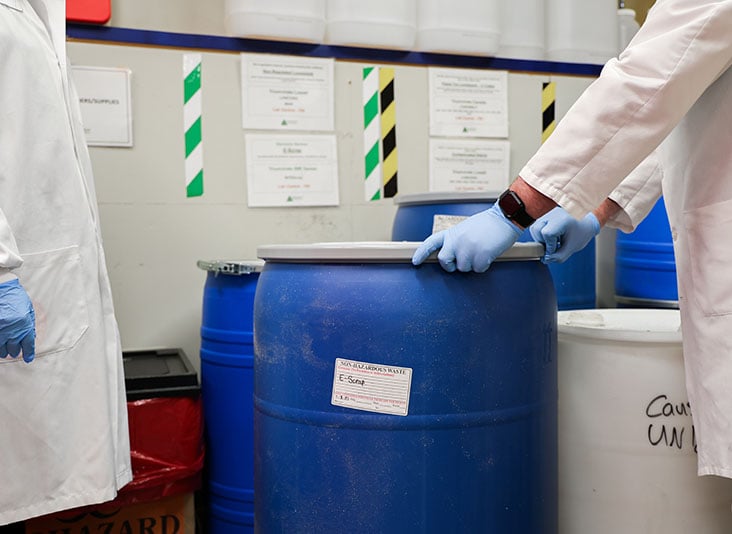
Labeling and classifying waste containers in a multi-site waste management program.
Hazardous Materials

Multi-Site Waste Management Strategies for Scalable Operations

Multi-site companies rarely design their waste programs from a blank page. More often, they inherit them through growth: A new facility opens. A lab ...

Industrial worker in a hard hat reviewing data on a laptop in a warehouse or manufacturing facility.
Waste Management

3PL Compliance Gap Analysis for Supply Chain Organizations

Warehouses and distribution centers today handle an ever-growing mix of products: regulated goods, defective goods, damaged materials, a nd more. A ...