

Fall Protection Safety: Strengthen Your Weak Spot
The Occupational Safety and Health Administration’s (OSHA’s) Fall Protection – General Requirements (1926.501) safety standard continually tops the list of the top 10 OSHA violations. This demonstrates not only a continual failure by employers to protect their employees from avoidable falls, but also an emphasis by regulators on ensuring adequate worker fall protection safety.
Why Workers Fall
Whenever teams are working at heights, there is a fall risk to employees—both from employees themselves falling or from materials falling on them. In these instances, OSHA mandates that all the appropriate fall prevention guidelines are strictly followed. Employees may fall from height if:
- Fall protection equipment is used improperly
- OSHA fall protection training is lacking
- Fall arrest systems are missing or not used
- Fall protection equipment is faulty
OSHA’s fall protection safety guidelines help mitigate and lessen the risk.
Risk of Fall Protection Regulation Failures
Any violations are public record and therefore expose an organization to financial, compliance, and safety risks.
Noncompliant, unsafe practices can result in fines of up to $16,550 per infraction. But far worse, fall accidents unfortunately often prove fatal for workers. Falls from height have remained the leading cause of death to workers for years—accounting for over 28% of workplace fatalities in 2025 and thousands of daily injuries.
Because of the vast risk that falls and other OSHA violations pose, OSHA has been aggressively combatting workplace dangers by doing such things as expanding the guidelines for their Severe Violator Enforcement Program (SVEP). When an organization is considered a “Severe Violator,” they leave themselves open to harsher penalties, public scrutiny and loss of trust, and increased inspection frequency.
Complying with OSHA’s fall protection regulations, including fall protection safety training requirements, can save not only your bottom line—but may literally save a life.
Workplace Fall Protection Regulations
To protect worker lives, OSHA regulates worksite compliance and safety precautions to prevent falls from occurring from heights or on the same level. The general regulations also safeguard workers from falling objects. The verbiage of the Fall Protection – General Requirements standard requires employers to have fall protection systems in place, including protected edges, strength and integrity in working surfaces, acknowledgment of holes, and more.
Below are the most crucial aspects of the OSHA fall protection standard that can serve as a starting point for fall protection compliance:
Unprotected Sides and Edges (standard 1926.501(b)(1))
According to OSHA, “Each employee on a walking/working surface (horizontal and vertical surface) with an unprotected side or edge which is 6 feet or more above a lower level shall be protected from falling by the use of guardrail systems, safety net systems, or personal fall arrest systems.”
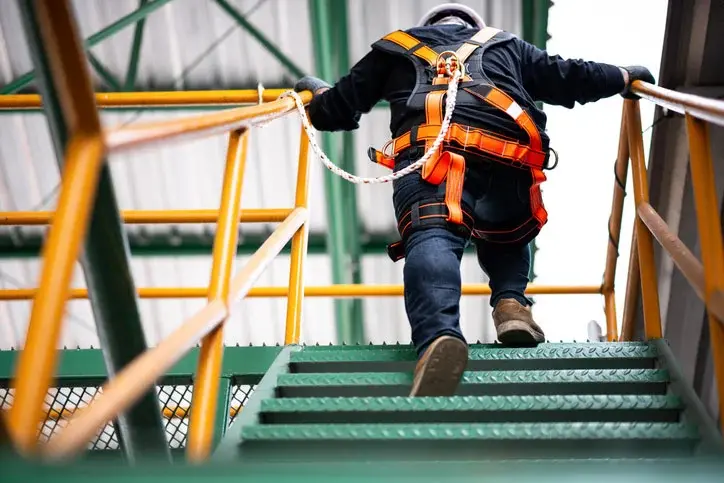
Practically, this means that there should be no unprotected edges on a work site from which a worker can fall, and fall protection systems must be in place to help prevent falls from these edges—protected or otherwise. At a minimum, elevated floors, runways, and platforms should have toeboards and guardrails. Workers may be required to wear harnesses, lifelines, or use anchorage as personal fall protection systems to protect themselves from falls from elevated surfaces.
Holes (standard 1926.501(b)(4))
From OSHA: “Each employee on walking/working surfaces shall be protected from falling through holes (including skylights) more than 6 feet above lower levels, by personal fall arrest systems, covers, or guardrail systems erected around such holes.”
In practice, this is very similar to the “Unprotected Sides and Edges” standard section. A hole, in this case, is defined as any gap larger than 2 inches wide on any working surface. Where holes are present, especially on elevated surfaces, guardrails and/or toeboards should be in place and workers should use personal protection systems to prevent tripping, walking, or falling into them.
For holes, however, workers can also be protected via the use of hole covers. Hole covers should be able to support at least double the weight of any workers, equipment, or material that may rest upon them at any given time. Covers also need to be marked to indicate they cover a hole and must be securely fastened—a piece of plywood thrown on top of a gap simply would not do the trick.
Protection from Falling Objects (standard 1960.501(c))
OSHA states: “When an employee is exposed to falling objects, the employer shall have each employee wear a hard hat and shall implement [safety] measures.”
The two standard sections above deal with precautions to prevent workers from falling—this section deals with ways to prevent injury to workers from falling objects. Some of the concepts are similar, however—toeboards and guardrails should be in place to prevent objects from falling from above. Objects should also always be placed away from edges and barricades should be used to prevent employees from entering areas where items may fall from aloft.
Ladders (standard 1910.23)
OSHA’s ladders safety standard outlines multiple best practices for ensuring worksite ladders do not enhance fall risk for workers; Fall protection and ladder safety go hand in hand. Ladder fall protection guidelines include rung spacing, support conditions, materials, human usage, and other considerations.
Scaffolding (standard 1926.451)
The OSHA scaffolding general requirements guidelines mimic those of ladders in such that the administration outlines multiple best practices to minimize fall risk and support fall protection. Included in this standard are rules about capacity and load, platform construction, support devices, counterweights, scaffolding fall protection systems, and more.
Methods of Fall Protection
The main methods of fall protection are active and passive prevention, arrest, and restraint.
Fall Prevention, Arrest, and Restraint
Fall prevention systems are designed to prevent employees from falling (guardrails, harnesses, toeboards); fall arrest systems prevent employees from hitting the ground once they’ve fallen (nets, lanyards, and anchor points); fall restraint systems stop a fall from occurring in the first place (lifelines or lanyards that prevent employees from approaching an edge.
Passive Fall Protection vs. Active Fall Protection
Passive fall protection systems are stationary safety measures that protect employees from falls without human training, action, or gear. This includes guardrails, nets, toeboards, hole covers, and more. A passive fall protection system is the preferred method for fall protection (after total risk elimination) as they protect everyone and eliminate human error as there is no employee intervention needed. Active fall protection describes dynamic safety measures that require employee participation—harnesses, anchors, connectors, etc. Both types of fall protection can prevent workers from falling or arrest them mid-fall.
Common Active Fall Protection Systems
Active fall protection systems can support prevention, arrest, and restraint:
- Arrest systems: Stop employees mid-fall
- Positioning systems: Align employees to allow them to use both hands
- Retrieval systems: Retrieve workers safely post-fall
- Suspension systems: Lower employees to and support them on elevated areas while maintaining full use of their hands
Total Risk Elimination
The best thing that an organization can do is to completely eliminate fall risks. This can include stopping everyone from working at heights, moving equipment to a lower level, and more.
Prevent Employee Falls: Fall Protection Safety Tips
Luckily, all falls—including injurious or fatal ones—are preventable. The mitigation strategies discussed above are a great start for ensuring overall operational safety, but mitigation starts with identification of fall protection safety lapses in your workplace and proper employee fall protection training. If you are an operations or safety manager, read on for a few tips to stay compliant and avoid worker injury.
- Review worksites: It is important to do a thorough review of your worksites to determine if any unprotected edges, holes, etc. are present. This is especially important if any construction is occurring at your site. Any time a fall risk is identified, make sure to assess the fall protection systems in place for that location. For instance, are all holes covered? Is a guardrail in place along edges? Are workers required to wear harnesses in fall hazard locations? Consider every possible outcome—if safety lapses exist, shut down the location until the issue is remedied, appropriately and compliantly.
- Invest in fall protection and EHS training: Even if you have fall protection systems in place, poor fall protection training may result in workers ignoring these precautions. Emphasize the role and importance of trainings to your workers—don’t let them begin work until appropriate training is completed. Regularly remind contractors of these regulations as well, in order to create an onsite safety culture mindset and ensure every person that steps foot in your facility is protected.
- Enforce the rules: This is arguably the most important aspect of successful fall protection—enforcing the rules. Don’t allow any exceptions to fall protection regulations, as this could result in slack in all aspects of work in the facility. Be present on site to confirm that rules are being followed, and stress the consequences of straying from fall protection guidelines. It only takes one instance, a split-second, to determine the fate of a worker should fall hazards exist.
The team at Triumvirate Environmental has the experience to ensure your operations stay safe—including when met with fall protection safety concerns. We can help you help your employees and make sure you stay compliant while avoiding fines through EHS consulting from pro teams that have seen it all. Interested in learning more and improving the safety of your worksite? Contact us today to learn more.
Fall Protection Safety FAQ
The height at which fall protection is required will vary depending on the industry and the work being performed. For general industry, if someone is working 4 feet or more above a walking level, fall protection is required; 6 feet for the construction industry; 10 feet when working on scaffolding. If working above dangerous equipment, on a shipyard, or on roofing, other factors will apply. Protection from falling objects may also be required in other situations.
When your teams are working 6 or more feet off of a lower level in a construction setting, fall protection is required. Best practices for protecting teams from falling objects apply when workers are performing tasks at height above other working surfaces.
Fall protection systems either prevent a fall from occurring or stop workers mid-fall. These systems may rely on a combination of anchors, harnesses, connectors, exclusion zones, and more.
Hazard elimination will always be the first line of defense against any hazard, including falls. Passive fall protection such as guardrails and toeboards tend to be the most reliable as there is no human error involved in these systems working.
Employees should inspect fall protection equipment before every wear to ensure the equipment is still intact and not damaged or worn. A formal inspection should be conducted at least annually or as demanded by harsh conditions.
The four methods of active and passive fall protection include prevention, arrest, restraint, and elimination.