


Every year, organizations spend millions managing hazardous waste—but many are trying to optimize the wrong cost centers.
While disposal fees receive the most attention, some of the biggest opportunities for savings are hidden inside transportation networks, vendor fragmentation, processing inefficiencies, and operational complexity that accumulates across facilities over time.
Organizations looking to reduce hazardous waste disposal costs can maximize savings with multi-functional waste facilities. Integrated waste management facilities and modern Transportation, Storage, and Disposal Facility (TSDF) infrastructure helps organizations reduce hazardous waste disposal costs, improve operational efficiency, and build more scalable waste management programs for the future.
Typical Multi-Site Waste Profiles
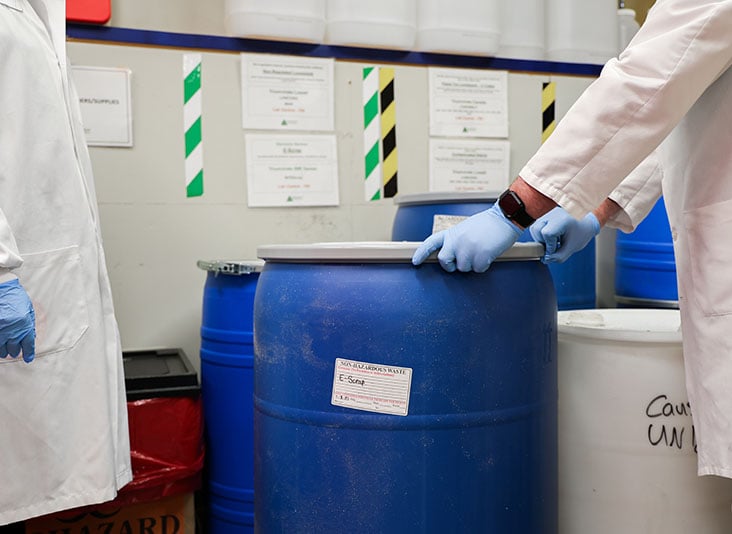
Organizations today generate multiple waste streams simultaneously; hazardous and non-hazardous wastes that take the form of liquids, solids, and sludges, requiring extensive industrial wastewater treatment or contaminated soil remediation. Across industries like life sciences, advanced manufacturing, healthcare, and higher ed, waste streams can include:
- Liquid hazardous waste like solvents, flammable liquids, wastewater
- Solid hazardous waste such as contaminated debris, PPE, absorbents
- Acids, bases, and oxidizers
- Wastewater and sludges
- Metal-bearing and special wastes
- Small-quantity chemicals from R&D or lab environments
- Non-hazardous industrial waste streams
Each waste stream comes with handling, processing, or disposal needs for full compliance; the more waste exists onsite, the higher costs rise. On top of this, most multi-site waste management programs evolve reactively as new waste streams are discovered or generated. This creates a disjointed waste program with:
- Multiple vendors across different sites
- Disjointed handling processes and SOPs
- Ineffective and inconsistent training programs
- Inefficient routing and scheduling
- An overall lack of visibility into what’s really going on
Misaligned waste programs allow unseen costs to stack.
Where Hazardous Waste Disposal Costs Really Add Up
Beyond a large waste profile and cost gaps in misaligned waste programs, numerous factors can have a real, tangible impact on how to reduce hazardous waste disposal costs. The three most common areas where those costs begin to accumulate are transportation, vendor fragmentation, and handling and processing inefficiencies.
Transportation
Every waste stream follows its own path to treatment or disposal. Some materials require specialized transportation. Others must be shipped to facilities with specific treatment capabilities. Certain waste streams may travel significant distances simply because local infrastructure cannot accommodate them. Hidden transportation costs can be compiled for multiple reasons.
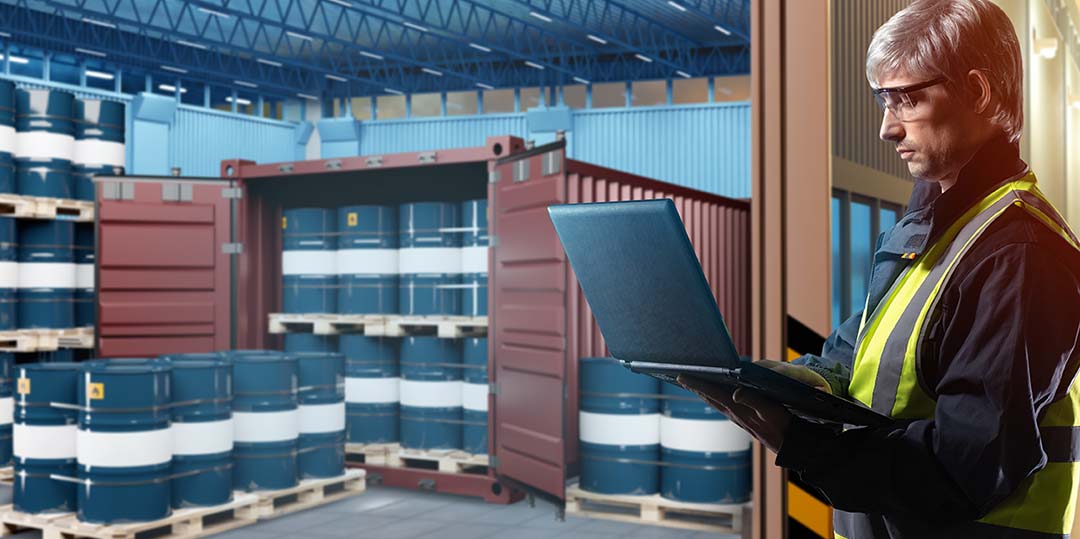
This is especially true if these organizations utilize multiple end-disposal vendors and facilities, and each waste needs to be transported somewhere else. Every time a shipment goes out, another cost is added to the bill—vs. working with one multi-use waste facility for all wastes, improving consolidation, and reducing frequency of shipments. Reducing hazardous waste transportation costs can result from having more specialized onsite support to begin with.
Waste Vendor Fragmentation
Different waste types mean different vendors. Different regions mean different disposal contracts. Different sites deal with different requirements. The result of all of this? Fragmented, ineffective, cost-prohibitive waste programs that don’t allow an organization to get what they really want—and need—from hazardous waste disposal services.
Working with multiple vendors for waste management is common for organizations that generate different waste streams; One vendor can recycle chemical waste, while another provides waste-to-energy capabilities for general waste, and another provides options for hazardous waste landfill disposal. This means multiple contracts, pricing models, and coordination points—and at each point, costs can pile on.
In systems like this, there is no pricing consistency, no economy of scale, and increased administrative overhead—all issues that make it harder to reduce hazardous waste disposal costs at scale.
Handling and Processing Inefficiencies
As waste programs become more fragmented, organizations often lose the ability to route waste based on efficiency and cost. As waste volumes grow across multiple sites, these inefficiencies compound:
- More handling steps increase labor and operational costs.
- Additional transfers create more opportunities for delays and disruptions.
- Waste travels farther than necessary to reach compatible treatment facilities.
- Disposal pathways are determined by vendor capabilities rather than optimal economics.
- Opportunities to leverage bulk processing or consolidated treatment are lost.
Over time, organizations can find themselves paying not only for disposal, but also for the inefficiencies built into the system. Understanding how these challenges are connected is the first step to understanding how to reduce hazardous waste disposal costs.
TSDFs Are Critical to Reducing Hazardous Waste Disposal Costs
Multi-functional waste facilities mitigate many of the cost issues organizations commonly face. With more capabilities in one place, there are fewer handoffs, fewer decisions, and fewer inefficiencies. Transportation is easier, and shipments can be consolidated. Instead of juggling multiple vendors, organizations get one smarter, more streamlined solution. That’s the TSDF of the future: a multi-functional facility built to handle multiple waste types in one well-planned location.
How Multi-Functional Waste Facilities Build Value and Lower Costs
Waste management cost savings typically aren’t the result of one sweeping corporate initiative—they come from eliminating inefficiencies across the entire system—the many sites, shifts, and day-to-day operational tasks that hide inefficiencies.
That’s what makes a multi-functional TSDF so valuable to an enterprise with complex waste challenges. Rather than treating transportation, processing, storage, and disposal as separate activities managed by different providers, a multi-functional facility brings them together under one roof. That means access to critical infrastructure, but also the people who know how to optimize it.
Organizations typically see the biggest impact across four key areas:
Transportation
Consolidating waste streams destined for one facility means fewer pickups and larger, less frequent shipments instead of recurring small loads. This reduced reliance on long-haul trucking and unlocks the ability to leverage rail or bulk transportation options as available and where hazardous materials transportation regulations deem it appropriate.
Overall, this means:
- Lower cost per shipment and per unit of waste
- Reduced fuel and logistics variability
- More predictable monthly spend
- Flexibility in operational scalability
Reducing hazardous waste transportation costs goes far in reducing overall waste disposal costs.
Processing and Disposal
Multi-functional TSDFs mean bulk waste processing instead of small-batch handling. These facilities also unlock more efficient treatment technologies like fuel blending and waste stabilization.
Overall, this means:
- Reduced per-unit cost, even as volume increases
- Lower disposal costs per drum and per gallon
- Competitive pricing for disposal programs
- The ability to optimize waste streams by shifting to more cost-effective disposal methods
TSDF capacity is no longer a limiting factor for a cost-effective waste program.
Waste Vendor Consolidation and Reduced Overhead
With fewer waste vendors, there are less contracts to manage—and subsequently less time spent coordinating pickups, profiling waste, and getting approvals. This also means more streamlined invoicing, reporting, and documentation—coming from one facility instead of many.
Overall, waste vendor consolidation means:
- Reduced internal labor burden on EHS, operations, and procurement
- Fewer costly errors, delays, and miscommunication
- Faster decision-making and execution
Avoided Costs: Risk, Compliance, Disruption
When evaluating how to reduce hazardous waste disposal costs by using multi-functional waste facilities, it’s critical to consider avoided costs—especially as it relates to risk, compliance, and operational disruption. With fewer handling touchpoints, incident risk is reduced as there are simply fewer opportunities for things to go wrong. More consistent processes reduce compliance gaps, while modern infrastructure ensures stronger audit defensibility in the face of regulators.
Overall, this means:
- A lower likelihood of fines, violations, and remediation costs
- Reduced downtime tied to waste handling issues
- Protection of brand and operational continuity
BONUS: Better Cost Visibility and Forecasting
Lower costs now are important, but so is cost visibility and forecasting into an uncertain future. The use of one multi-functional TSDF for many waste disposals needs means centralized data and reporting, consistent standardized pricing and service models, and overall improved transparency across sites.
Overall, this means:
- The ability to forecast waste spend more accurately
- Easier identification of optimization opportunities across waste profiles
- Stronger financial planning and budgeting
The real value of a multi-functional, consolidated approach is that organizations have a single source of truth: a partner that centralizes all the information and distills it into actionable data, making operations more scalable and predictable.
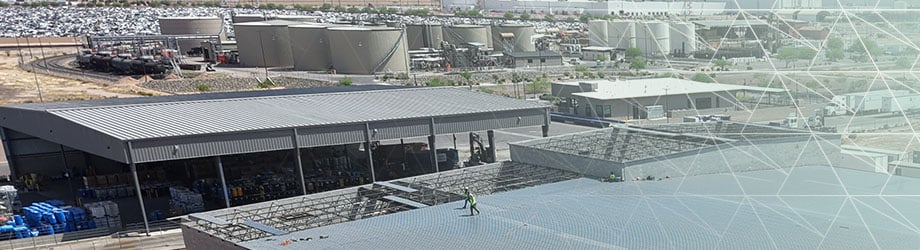
Example: Triumvirate Environmental in Casa Grande, AZ
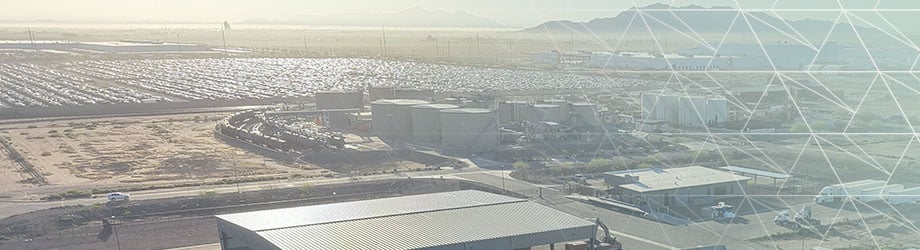
For years, waste management in the western United States has been constrained by limited disposal infrastructure and the resulting long transport distances needed to get waste to a compliant end-disposal facility. A practical example of this model is Triumvirate Environmental’s Casa Grande facility.
This 25-acre site, located in Arizona, expands both hazardous and non-hazardous waste disposal capabilities for the West Coast. With about 60,000 square feet of hazardous waste processing space and access to high-capacity systems like fuel blending tanks, waste management infrastructure, and stabilization units, Casa Grande handles a wide range of waste types safely, quickly, compliantly, and cost-efficiently.
On top of this, the entire facility is rail-accessible. This rail accessibility, while not unique to multi-functional waste facilities, supports bulk shipment and lower logistics costs to ensure every dollar is well spent—and that you’re not paying more than you have to.
Why Casa Grande, and Other Multi-Functional Waste Facilities, Matter for Cost
Casa Grande, and other multi-functional waste facilities, design a system in which less effort is required—but better outcomes are achieved. In utilizing a multi-functional TSDF for all waste management and disposal needs, an organization effectively:
- Consolidates multiple waste streams
- Reduces transportation distance and frequency
- Minimizes handoffs and handling risk
- Avoids potential noncompliance costs and risks
- Improves future forecasting
Multi-functional waste facilities like Casa Grande enable simpler operations, lower total cost of ownership, and greater scalability—helping organizations reduce hazardous waste disposal costs through consolidated, efficient infrastructure.
The First Step: How to Optimize Multi-Site Waste Management Programs
Infrastructure alone can’t do it all—real waste management efficiency gains happen when strategy, execution, and infrastructure are connected. That requires more than a disposal vendor—it requires a partner that can design the system, operate within it, and continuously improve it over time.
Triumvirate Environmental delivers this through an integrated account governance model in which we offer consolidated waste management services including:
- Onsite environmental service professionals, placed within your operations, to manage and execute day-to-day EHS and waste tasks to ensure compliance and identify optimization opportunities in real time
- A deep advisory and EHS consulting bench that works with you to architect smarter waste programs, including hazardous waste program optimization
- Multi-functional infrastructure and circularity pathways that convert waste into more efficient, sustainable outcomes
With Triumvirate Environmental, organizations gain: One partnership. One system. One point of accountability. And the option to maximize cost savings in our fully integrated model makes full use of TSDF capacity and scalability.
Reduce Hazardous Waste Disposal Costs: FAQ